
Skip to content

Operation Chariot | 28 March 1942

The raid on St Nazaire: Operation Chariot and The Greatest Raid

Operation Chariot was a British raid on the port of St Nazaire in German-occupied France on 28 March 1942. Royal Navy crews and Commandos wrecked the Normandie dry dock, denying it to the battleship Tirpitz for the rest of the war. It is known as The Greatest Raid of All.
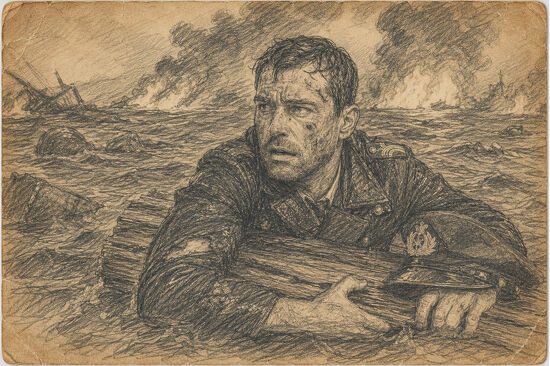

Illustration of the raid on St Nazaire from For Your Tomorrows

Background

Why St Nazaire?

In early 1942, Britain feared the Tirpitz would break out into the Atlantic and attack convoys. A ship that size needed a dry dock for repairs. On the French Atlantic coast, only the Normandie dock at St Nazaire was big enough. Destroy the dock, and the Tirpitz would have to stay in northern waters.

The plan

How the raid worked

The force sailed from Falmouth on 26 March 1942. At its centre was HMS Campbeltown, an old destroyer disguised to look German and packed with explosives in her bow. Small wooden motor launches carried most of the Commandos.

In the early hours of 28 March, Campbeltown rammed the outer gate of the dock. Commandos landed to destroy pumping machinery and other dock targets. The explosives in Campbeltown went off later that morning on delayed fuses, wrecking the gate and killing many German soldiers on and around the ship.

Key facts

The cost

The Victoria Crosses went to Commander Robert Ryder, Lieutenant Colonel Charles Newman, Lieutenant Commander Stephen Beattie, and posthumously to Sergeant Thomas Durrant and Able Seaman William Savage.

Prisoners of war

What happened to the men who were captured

Most of the 215 prisoners spent the rest of the war in German camps. Naval prisoners went to camps including Marlag und Milag Nord near Bremen. Their stories are told less often than the raid itself.

For Your Tomorrows by Tony Allwood

Historical fiction

A novel based on a true story from the raid

For Your Tomorrows by Tony Allwood follows Walter, a schoolteacher from northern England who joined the raid and was captured. The novel follows him through Marlag und Milag Nord, Marlag O and Stalag VIII-B, his escape attempts, and the promise to come home. It is based on the author’s Great Uncle Walter.

Questions

Frequently asked questions

In the early hours of 28 March 1942. The force sailed from Falmouth in Cornwall on 26 March.

Yes. The Normandie dry dock was put out of action for the rest of the war, so the Tirpitz could not use it. The cost was high. More than half of the men who took part were killed or captured.

Five. They went to Commander Robert Ryder, Lieutenant Colonel Charles Newman, Lieutenant Commander Stephen Beattie, and posthumously to Sergeant Thomas Durrant and Able Seaman William Savage.

215 men were taken prisoner. They spent the rest of the war in German prisoner of war camps. Naval prisoners were held at camps including Marlag und Milag Nord near Bremen.

Yes. For Your Tomorrows by Tony Allwood is historical fiction based on a true story. It follows a schoolteacher who takes part in Operation Chariot, is captured, and spends years in prisoner of war camps.